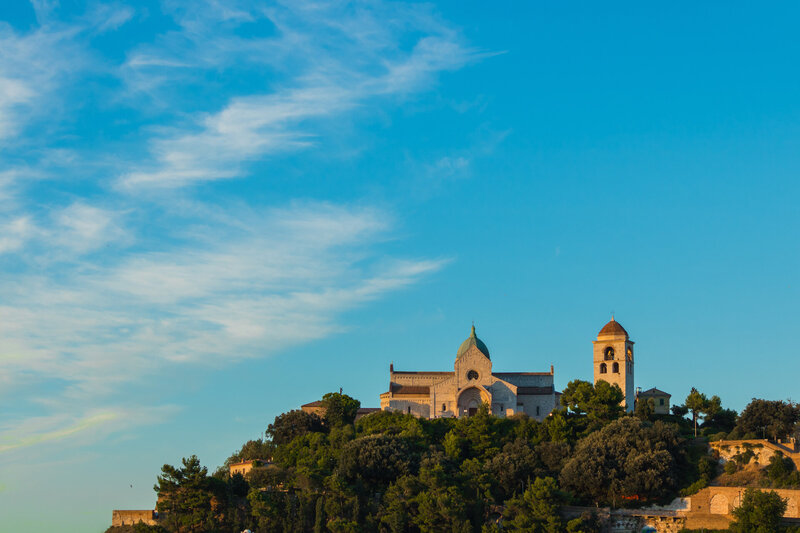
The dream of Tuscany is a powerful one: cypress-lined roads running through lush, rolling hills. Sipping on a crisp class of Chianti overlooking a vineyard as the sun sets with a quaint, stone farmhouse visible in the distance. This romanticized image has earned Tuscany a spot at the top of countless travel bucket lists.
But, what you won’t see in those beautiful images is what Tuscany is actually like in the present day and how difficult it is to have an authentic experience in a place that’s been overrun by tourism. The image you had in your head starts to fall apart when every moment has to be meticulously scheduled: timed-entry tickets for art galleries in Florence, dinner reservations at that spot in Siena you had to make three months ago, and ticketed, impersonal winery tours.
The relaxed, spontaneous trip you had in mind quickly turns into a rigid, minute-by-minute itinerary. It’s the antithesis of the laid-back pace of Italian life you’ve been craving.
If you want the unscripted and deeply personal experience that Tuscany once promised, you’re going to have to abandon Tuscany altogether and head next door to Italy’s Best Kept Secret Region: Le Marche.
Consider us your new Italian best friends and your eyes on the inside to help you plan the vacation you actually want instead of the one you think you want. We’re putting our home region of Le Marche in the ring up against one of the tourism giants of the world. At the end of this guide, you’ll have all the information you need to make the best choice for your travel goals!

Is Tuscany Too Crowded? The Reality of a World-Famous Destination
The discerning traveler will always ask themselves this question: Will my actual experience live up to the hype of this destination?
The discerning traveler doesn’t choose a location based on the pretty postcard photo, they choose based on what the experience will actually be like on the ground.
And with Tuscany, unfortunately, the veneer of magnificent art, culture, and landscapes out of a Renaissance painting edits one crucial reality: you’re sharing the experience alongside millions of other people in a destination that’s been shaped to fit tourism.
What that means for you is the experience is often less about admiring the beauty and more about navigating a human traffic jam. You’ll spend a lot of your time in a shoulder-to-shoulder shuffle through medieval streets never meant to handle that many people, caught in the middle of the battle for a perfect Instagram photo.
Beyond the physical inconvenience of crowds, there’s a huge impact on your time and freedom. The dream of the spontaneous, Italian vacation where you’re enjoying every moment of your precious paid vacation time collides with the “Reservation Gauntlet” of most attractions.
How Far in Advance Do You Need to Book Reservations in Tuscany?
If you want to see the masterpieces in Florence’s Uffizi or the Accademia Galleries, you need to book timed-entry tickets weeks, if not months, in advance depending on the season of your visit. The relaxing escape you need quickly becomes a rigid itinerary dictated by your reservation schedule rather than what you feel like doing that day.
The constant demand is what leaves you with that feeling of needing a vacation from your vacation, which dilutes the authenticity you came for. The charming winery tour is your sixth tour group of the day, and you feel like you’re on some sort of boozy high school field trip. The menu at the beautiful piazza restaurant is the “Greatest Hits” of meals palatable for tourists, but you know it’s not what the locals are eating.
Is Tuscany Worth The Money? The Popularity Tax
Not to mention, you’re paying a “Popularity Tax” on every coffee, meal, and hotel room—a premium for the privilege of even stepping foot in a world-famous location.
And we all know the saying: Time is money. Which is absolutely true when you’re on a once-in-a-lifetime Italian vacation! All the time you waste standing in line and waiting for reservations is time you could have spent actually enjoying yourself.
So, the question isn’t really whether Tuscany is overrated or worth the money, because the hype started for a reason, resulting in a premium price tag. But, as undeniably beautiful as some parts of Tuscany are, the authenticity has become diluted over time to the point that the region is nearly unrecognizable from its former glory.
The real question is: What if you could have the same beauty, history, and flavor without battling the crowds and paying the popularity tax? The answer to that question is Le Marche—and the proof is in the food, wine, and culture.

Food Culture in Tuscany vs. Le Marche
Tuscany, with its internationally recognized wines and postcard-perfect landscapes, has long been a magnet for tourists, and over time, its food scene has evolved to cater to global expectations. In many areas, menus reflect what visitors think Italian cuisine should be rather than what it truly is, making it difficult to find authentic versions of regional favorites without significant research.
Le Marche, on the other hand, has remained a beacon of authenticity, where food is overwhelmingly made for locals first and visitors second. In general, we’ve noticed that restaurants prioritize tradition over trends. The region’s diverse culinary heritage, from fresh seafood brodetto on the coast to rich vincisgrassi in the mountains and crisp Verdicchio wines, allows the region to remain relatively untouched by mass tourism.
Le Marche’s Cuisine of Land and Sea: The Best of Both Worlds
Known as “All of Italy in One Region,” Le Marche’s cuisine is a reflection of its unique geography. Located between the rugged Apennine Mountains and the pristine Adriatic Sea, the region’s cooking perfectly joins hearty, mountain-inspired dishes with light and fresh coastal flavors, creating one of Italy’s most diverse and satisfying food traditions.
What truly sets this region apart though is the fierce commitment to hyper-local ingredients that change from one town to the next. One day you might be savoring artisanal cheeses from a mountain shepherd, and the next, you’re enjoying fresh-caught fish prepared by a fisherman’s family on the coast—all with generations of tradition behind them.
Must-try dishes from Le Marche include:
- Olive all’Ascolana – The undisputed star of the region! Large, tender green olives are stuffed with a complex mixture of slow-cooked meats, then breaded and fried to golden perfection. It’s an appetizer so beloved it has its own annual festival!
- Vincisgrassi – Far richer and more decadent than a typical lasagna, this baked pasta dish features handmade pasta sheets layered with a slow-simmered, multi-meat ragù, often enriched with chicken giblets, wild mushrooms, or black truffles.
- Brodetto all’Anconetana – Le Marche’s signature fisherman’s stew. Traditionally made with 13 different types of local fish and shellfish, it’s a vibrant and flavorful taste of the sea.
- Ciauscolo – A unique, soft, and spreadable pork salami, famed for its fine texture and delicate, garlicky flavor. Hailing from the mountain traditions of the region, it’s typically spread on warm, crusty bread.
While Tuscany’s cuisine is defined by its simplicity, Le Marche’s flavors offer a more diverse palate that takes you on a journey from mountain peaks to coastal shores, which you’ll experience firsthand when you join us on Italy’s Epicurean Journey.
Every day is a new adventure when you’re with us in Le Marche. Just to name a few, you’ll truffle hunt in the forest, dine on a seasonal tasting menu with a guided wine pairing at a Gambero Rosso award-winning winery, and indulge in a seafood lunch with views of the coastline! We think Le Marche absolutely deserves a spot on every culinary tour list—learn even more about why here.

Wine in Tuscany vs. Le Marche
Tuscany is home to some of Italy’s most famous and sought-after wines you’ll find on the fine dining list at restaurants around the world. The native Sangiovese grape produces Chianti, one of Italy’s most famous red wines, Brunello di Montalcino, one of Italy’s most prestigious wines, and Super Tuscans, which contains a blend of Sangiovese and international grape varieties.
But, just across the border is the most underrated, often overlooked wine region: Le Marche. We may be biased as Le Marche residents, but the stats speak for themselves: Our home region produces 15 DOC classifications of wine and five of the 74 DOCG varieties in Italy, making it an unsung hero in the production of organic and natural wines.
As we mentioned in the culinary section, the diverse landscape of land, sea, and mountains makes for diversity in wine production, too. While Tuscany offers a consistent landscape—the rolling clay hills ideal for the Sangiovese grape—in Le Marche, you can experience two completely different terroirs all wrapped into one region!
Must-try wines from Le Marche include:
- Rosso Piceno Superiore – One of Italy’s most famous dry red wines, often paired with Olive all’Ascolana or vincisgrassi.
- Verdicchio di Matelica Riserva – One of Le Marche’s five DOCG wines, which is produced at a local winery that will be your home base when you join us on Italy Uncorked. Delicate, dry white wine known for its subtle honey notes; pairs wonderfully with goat cheese and is often served with a variety of the local seafood dishes you’ll taste on your trip to Le Marche, Italy!
- Lacrima di Morro d’Alba – Produced by just a handful of winemakers in Le Marche, Lacrima di Morro d’Alba is made from red, tear-shaped grapes. DOC-classified since 1985 but was considered a beloved regional favorite long before it became part of the denominazione di origine controllata.
- Castelli di Jesi Verdicchio Riserva – This top wine from Le Marche was Designated in 2020 by the Wine Enthusiast as the Best White Wine in the World, making it one of the most highly sought after DOCG wines in Le Marche.
This is not an exhaustive list – we have a dedicated blog post on all the best wines from Le Marche. Click here to read!
It’s undeniable that Tuscany is one of the wine capitals of the world, producing some of the most famous and beloved varieties in the world. But in Le Marche, every sip is a new adventure. You’re more likely to find your new favorite Italian wine you’ll want to tell all your friends about when you get home, rather than sticking with the old classics everyone knows.
Looking beyond the wine itself, in Le Marche, you’re more likely to find a totally unique, once-in-a-lifetime experience at small, family-owned wineries rather than the highly-polished, but impersonal experiences at most Tuscan wineries. Still, it’s no easy feat to find the very best wines to drink in Le Marche on your own—which is exactly where we step in to carefully select the best wine producers on your small group tour of Italy.
Small-group travel is the only “travel hack” you need for a trip to Italy. Click here to learn the common mistakes and what to consider when choosing.

Experiences & Culture in Tuscany vs. Le Marche
Sometimes, what’s popular is popular for a reason. And Tuscany is certainly no exception to that rule—it’s home to some of Italy’s most significant architectural, artistic, and agricultural touchstones of Italian culture. But with that, there’s a price to pay when you want to experience them for yourself: the constant presence of crowds and rigid, advanced planning for every second of every day.
For some, that tradeoff may be worth it to see some of the most iconic cultural marvels of the world, but for other travelers, experiencing the pace of day-to-day Italian life far outweighs the prestige or notoriety of the destination. When you choose Le Marche, you don’t have to sacrifice the cultural experiences of Tuscany; you’re simply choosing a more authentic, personal version of Italy that allows you to slow down and soak it all in.
The problem with Tuscany is that much of the world sees Tuscany as Italy, often ignoring the lesser-known regions and what they may have to offer. This, in turn, results in disproportionate overtourism in the most well-known regions, which dilutes the regional culture and causes strain on infrastructure. By intentionally choosing a lesser-known region, you help to not only ease the effects of overtourism, but also pour into the communities that truly need your support!
To prove that you don’t have to sacrifice the cultural experiences of Tuscany when you visit a region like Le Marche, we’ve put together a list of things we think you’ll love in Le Marche for every type of traveler:
- For the Renaissance Art & Architecture Enthusiast: Instead of the Uffizi Gallery in Florence, explore the magnificent Ducal Palace of Urbino, a UNESCO World Heritage site and one of the most important monuments of the Italian Renaissance. It’s home to the Galleria Nazionale delle Marche, which contains masterpieces by Piero della Francesca and Raphael (who was born in Urbino!) in a remarkably uncrowded setting. Our Italy Uncorked tour includes a private, guided exploration of the city!
- For the Medieval Village Wanderer: If you dream of wandering the cobblestone streets of Siena and visiting the iconic Piazza del Campo, you’ll love Ascoli Piceno, our hometown and the home base for Italy’s Epicurean Journey! Known as the City of Travertine, Ascoli Piceno’s Piazza del Popolo is widely considered one of Italy’s most beautiful squares, paved entirely in shimmering travertine marvel. Unlike the tourist-packed Campo, we speak from experience when we say the piazza truly serves as the city’s living room, where you can sip an espresso at Caffe Meletti and watch local life unfold.
- For the Aspiring Wine Sommelier: Instead of the crowded and commercial Chianti Classico Wine Route, travel instead on the Verdicchio dei Castelli di Jesi Wine Route of Le Marche. Instead of the large, commercial wineries of Tuscany, you’ll discover small, family-run producers of arguably Italy’s best white wine. Join us on Italy Uncorked for a tour of the largest wine cooperative in the entire region, with a guided visit of the innovative & sustainable production practices to make Verdicchio, Montepulciano, and more of Marche’s finest. You’ll be based in the neighboring region of Umbria on this tour, another of Italy’s underrated wine regions.
And this is just to name a few of Marche’s best destinations that are comparable to what’s available in Tuscany! The region is also home to Italy’s Largest Roman Cistern in the medieval city of Fermo, the UNESCO City of Creativity, Fabriano, one of the earliest places of paper production in Europe, and the Frasassi Caves, Europe’s Largest Underground Karst Cave Complex.

How to Choose the Right Region for Your Italian Vacation
The real magic of Le Marche isn’t even the destinations; it’s the feeling you get when you realize that you’re living like a local, experiencing the pace of everyday Italian life—something that honestly is seldom available to you in most parts of Tuscany.
As Italian travel experts and travel enthusiasts ourselves, we know how tempting it is to go with the seemingly “easier” option when it comes to choosing a region for your vacation. It can feel intimidating to choose a region that’s not nearly as well-documented or talked about as Tuscany, but in doing that, you lose out on the experience you really want.
But, what if there was an “in-between,” where you could explore off-the-beaten-path without the intimidation of DIY travel? What if you could go to a hidden gem that was actually a hidden gem, not something everyone else also has in their Google Map bookmarks? That’s exactly where we at The Italian on Tour® step in!
While everyone else is fighting for elbow room in Siena and Florence, we’d love to introduce you to cheesemakers with family traditions dating back hundreds of years, wine in regions you can’t yet pronounce, and medieval villages with people ready to welcome you with open arms. Get matched with your perfect itinerary in just 60 seconds with our traveler quiz!